
India is not one country. It feels like many countries living side by side. Rajasthan has desert forts and royal palaces, and Kerala has quiet backwaters and spice gardens. Goa has beaches and sunsets, and Meghalaya has living root bridges that grow over rivers. Every state has its own language, festivals, music, and way of welcoming guests, which is why India’s culture is among the richest in the world. The official Incredible India website shows how much variety there is.
Wherever you travel, there is a story waiting. But the kind of story you want changes from person to person.
If you want to see heaven on earth, with snow peaks, deep forests, and clean mountain air, or if you want to hike through hills, sit beside a holy river at sunrise, or do something that makes your heart race, then your search has one clear answer: Uttarakhand is the best place to go.
Uttarakhand: The Land of Gods and Adventure
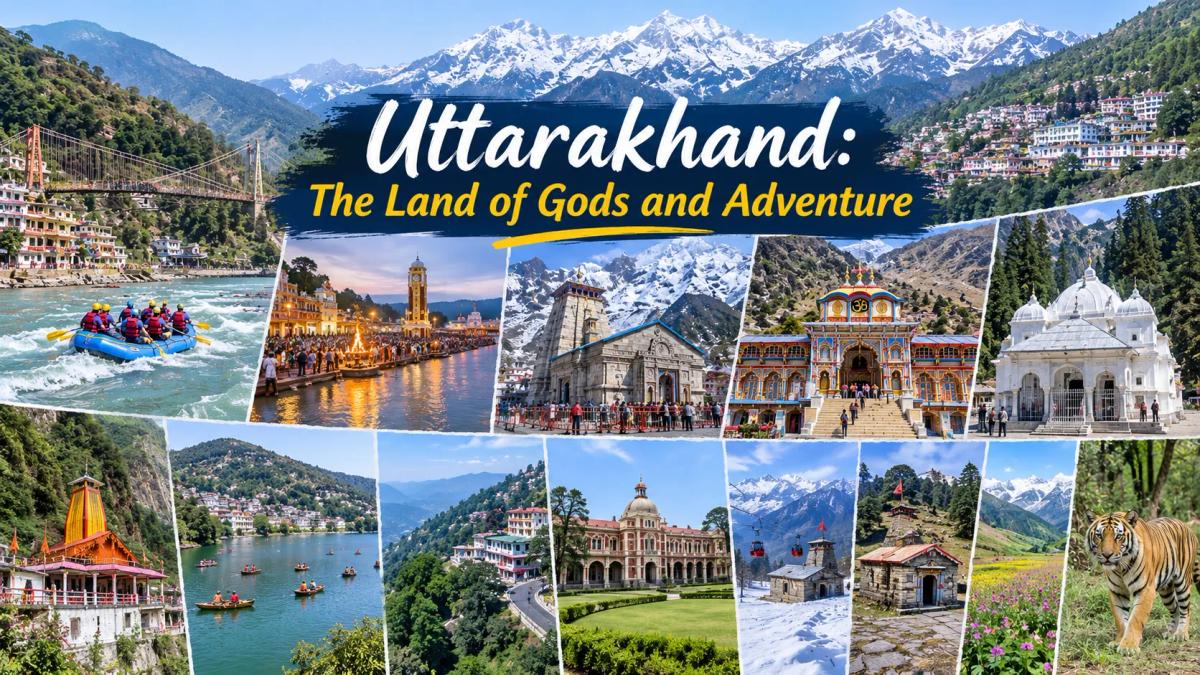
Uttarakhand is called Devbhoomi, the “Land of the Gods”. It became India’s 27th state in 2000, and its capital is Dehradun. It is small, but it holds an enormous amount of nature and faith. The state’s official tourism board, Uttarakhand Tourism, lists treks, temples, and travel updates.
- Sacred places: The Char Dham pilgrimage (Yamunotri, Gangotri, Kedarnath, and Badrinath) is here, and the Ganga begins her journey in these mountains.
- Mountains and treks: Nanda Devi and the Valley of Flowers are UNESCO World Heritage Sites, and treks like Kedarkantha and Chopta-Tungnath attract hikers from across the world.
- Wildlife: Jim Corbett National Park, India’s oldest national park (1936), is known for tigers and elephants.
- Hill stations: Nainital, Mussoorie, and Auli (for skiing) offer lakes, snow, and cool air.
- Gateway towns: Haridwar and Rishikesh sit on the Ganga at the foot of the mountains.
It is also easy to reach. Jolly Grant Airport in Dehradun is about 20 km from Rishikesh, and Haridwar Junction is about 25 km away. You can check train timings on IRCTC. The Delhi–Dehradun Expressway, opened in April 2026, has shortened the drive from Delhi, with Rishikesh about an hour past Dehradun.
Out of all these places, one small town brings spirituality, adventure, and good food together within a few kilometres: Rishikesh.
Things to Do in Rishikesh: The Adventure and Yoga Capital of India
Rishikesh sits where the Ganga leaves the Himalayas and enters the plains. It is about 25 km from Haridwar, 45 km from Dehradun, and roughly 240 km from Delhi. It is called the Yoga Capital of the World, and it is also India’s river rafting hub. In a single day you can meditate at dawn, walk to a waterfall, and raft through rapids by afternoon.
Here are the best things to do in Rishikesh.
1. Yoga and Meditation
Yoga made Rishikesh famous worldwide. In 1968, The Beatles came to study Transcendental Meditation with Maharishi Mahesh Yogi. Today you will find yoga schools for every level, from a single drop-in class to a teacher-training course. Parmarth Niketan, one of the town’s largest ashrams, runs daily yoga and meditation sessions, and the International Yoga Festival is usually held in early March. Even if you have never practised yoga, a morning class by the Ganga is a gentle way to begin.
2. Ganga Aarti Timings and Experience
At sunset the riverbank goes quiet. Priests lift large oil lamps, hymns fill the air, and small leaf boats with flowers and diyas float down the water. The Ganga Aarti at Triveni Ghat usually takes place around 6 to 7 pm, and the one at Parmarth Niketan often feels warmer and less crowded. Timings change with the season, so confirm locally. Arrive 30 to 40 minutes early, dress modestly, and enjoy it without your phone for a few minutes. Entry is free.
3. Hiking and Nature Walks
You do not need to be a mountaineer in Rishikesh.
- Neer Garh Waterfall: an easy forest walk to natural pools, good for families.
- Kunjapuri Devi Temple (about 25 km): the best sunrise point, with Himalayan peaks glowing at first light.
- Neelkanth Mahadev Temple (about 32 km): a scenic forest drive to a well-known Shiva temple.
Wear shoes with good grip, carry water, and avoid wet rocks after heavy rain.
4. Bungee Jumping in Rishikesh
For pure adrenaline, Rishikesh has India’s highest bungee jumping platform at about 83 metres, at Mohan Chatti. Expect to pay roughly ₹3,500 to ₹4,500 per jump. Book ahead on weekends and avoid a heavy meal beforehand. The fear lasts a few seconds, and the memory lasts far longer.
5. Camping in Rishikesh
After a full day outdoors, sleeping beside the river is hard to beat. Riverside camps near Shivpuri and Kaudiyala offer tents on the sand, a bonfire, simple food, and a sky full of stars. Pack a warm jacket, because river nights get cold even in summer.
6. Bridges, Ashrams, and Quiet Corners
Cross Ram Jhula at sunrise, see the old Laxman Jhula and the newer Bajrang Setu beside it (check the current status on arrival), and explore the street-art domes of the Beatles Ashram. For a still moment, sit in Vashishta Cave on the riverbank for a short meditation.
7. River Rafting in Rishikesh
And then there is the adventure most people travel here for. River rafting in Rishikesh gives you the Ganga from the inside. Some stretches are calm enough to look around at the forested hills. Then the water changes, your guide calls a command, everyone digs in, and you are in the middle of a rapid with names like Roller Coaster and Golf Course. If you want background on the sport itself, see Wikipedia’s page on rafting.
Rishikesh Rafting Packages and Prices
At Shivalik Ganga Adventure, white water rafting in Rishikesh runs on five routes, all finishing at Nim Beach:
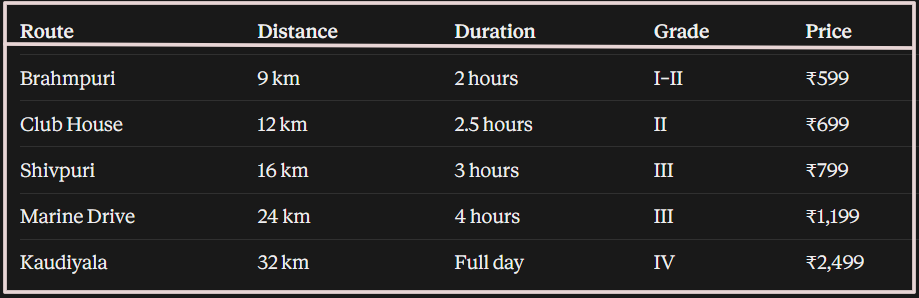
A longer route is not automatically a better one. First-timers and families often enjoy Brahmpuri, friends who want proper Grade III rapids choose Shivpuri, and experienced rafters can look at Kaudiyala, subject to eligibility and river conditions. If you are unsure what the grades mean, read our guide to Grade II vs Grade IV rapids.
Why Travellers Choose Shivalik Ganga Adventure
- Trained guides: Your guide explains the paddling commands and leads the group through the route.
- Safety-focused equipment: Every participant gets a life jacket and a helmet, fitted before the raft leaves the shore.
- Honest advice: We help you pick a route that fits your group, not just the longest one.
- Proven experience: More than 15,000 rafters have joined us, and our Google reviews praise our guides and safety.
- Easy booking: Call or WhatsApp +91 95688 68493.
Ready to go? Explore our rafting packages or book on WhatsApp.
Best Time for Rafting in Rishikesh
- Mid-September to end of June: Rafting season. Routes open in phases after the monsoon.
- October to March: The most comfortable weather for travel and sightseeing.
- March: International Yoga Festival time.
- April to June: Hot on land, but the river feels refreshing.
- July and August: Monsoon. Rafting is closed and landslides can affect roads.
Heavy rain can pause rafting even mid-season, so check the forecast on the India Meteorological Department website and confirm with your operator. Our post Is Rafting Open in Rishikesh? explains how it works, and Best Time for River Rafting in Rishikesh gives a season-by-season guide.
More Adventure Holidays Across India
Rishikesh is only the start. Ladakh and Spiti Valley offer high passes and monasteries, Manali has snow and paragliding, and the Andaman Islands are great for diving. For official trip planning, visit Uttarakhand Tourism and Incredible India.
Final Thoughts
The best adventures in India are not only about adrenaline. They are the quiet moments in between: a floating lamp on the Ganga, a sunrise from a hilltop temple, a raft full of friends laughing after the last rapid. Uttarakhand puts all of this within a few hours of each other, and Rishikesh is where it comes together.
When you are ready, message Shivalik Ganga Adventure on WhatsApp at +91 95688 68493, and we will help you choose the right route for your date and group.
Frequently Asked Questions
How much does river rafting in Rishikesh cost?
Our listed prices range from ₹599 (Brahmpuri, 9 km) to ₹2,499 (Kaudiyala, 32 km). Confirm the current price before booking.
Which is the best rafting route in Rishikesh?
It depends on your experience and time. Shorter routes suit beginners and families, and longer routes suit people who want bigger rapids.
Is rafting in Rishikesh safe for beginners?
Suitable beginner routes can be a good option if you meet the requirements and follow your guide’s instructions. Rafting is still a natural adventure with real risks.
Is rafting open in Rishikesh today?
The season usually runs from late September to June, but each route depends on the river that day. Message us with your date and we will confirm.
How many days are enough for Rishikesh?
Two days cover the main sights, and three days let you add rafting, a sunrise at Kunjapuri, and Neelkanth without rushing.


