
If you are planning your first trip, one question usually comes before price, route or dates: is river rafting in Rishikesh safe?
The honest answer is that river rafting in Rishikesh can be a well-managed adventure activity, but it is never risk-free. The Ganga is a natural, moving river. Water levels change, weather changes, and rapids behave differently from day to day. What makes a trip safe is not luck. It is a combination of the right guide, the right gear, the right route for your group, and your own willingness to follow instructions.
This guide explains how safety works on a rafting trip, what equipment you should expect, what rules to follow, and which questions to ask any operator before you book.
Is River Rafting in Rishikesh Safe? The Short Answer
Rishikesh is one of the most popular places in India for rafting, and thousands of visitors raft here every season, including beginners, families and groups of friends. When a trip is run by trained guides, with properly fitted safety equipment, on a route that suits the group and in suitable river conditions, it can be a safe and enjoyable experience.
But rafting is still a natural adventure activity with inherent risks. Anyone who tells you it is "100% safe" is not being honest. The goal is to reduce risk as far as possible, not to pretend it does not exist.
Four things decide how safe your trip will be:
- The guide leading your raft
- The safety equipment you use
- The route and rapid grade you choose
- The river and weather conditions on the day
Let us look at each one.
1. The Guide: The Most Important Safety Factor
On any river rafting trip in Rishikesh, your guide is the person who reads the water, decides how the raft approaches each rapid, and gives the commands that keep everyone paddling together.
A good rafting guide should:
- Know the route, its rapids, eddies and safe landing spots
- Give a clear safety briefing before the raft enters the water
- Explain paddling commands in simple language
- Watch the whole group, not only the front of the raft
- Know how to respond if someone falls out of the raft
At Shivalik Ganga Adventure, trips are led by trained river guides who have run the Ganga for years. Your guide explains what to expect as the river changes, and the most important rule is simple: when the guide gives a command, follow it immediately.
2. Safety Gear: What You Should Always Wear
Before you step into a raft, you should be given the essential safety equipment and shown how to wear it. Do not skip this step, even if you are a confident swimmer.
Life jacket
The life jacket (a personal flotation device) keeps you afloat if you end up in the water. It should be snug and fully fastened. A simple check: lift the jacket by the shoulders. If it rides up over your chin or ears, it is too loose. Never take it off during the trip, not even in calm stretches.
Helmet
A helmet protects your head from paddles, rocks and the raft itself. It should sit level on your head, not tilted back, with the chin strap fastened firmly.
Paddle and raft
Rafts and paddles should be in good condition. A reputable operator checks its equipment before trips and does not use damaged gear. If something looks worn or broken, speak up before you board.
What to wear yourself
Wear quick-drying clothes that you are happy to get wet, and secure footwear. Avoid heavy cotton jeans, loose jewellery and anything that can snag. Our guide on what to pack for a rafting trip in Rishikesh has a full checklist.
3. The Safety Briefing: Do Not Treat It as a Formality
Every rafting trip should begin with a safety briefing. Pay attention, because the first rapid arrives quickly and there is no time to ask questions in the middle of it.
A good briefing covers:
- How to sit in the raft and where to hold on
- Paddling commands such as forward, back, stop and get down (exact words can vary by guide, so ask for them to be repeated)
- How to grip your paddle safely
- What to do if you fall into the water
- Hand signals or call-outs used by your guide
If you do not understand something, ask. A good guide would always prefer a question on the shore to confusion on the river.
4. Rapid Grades: Why Route Choice Matters
Rapids are classified using the International Scale of River Difficulty, from Grade I (easy) to Grade VI (extreme). Choosing a route that matches your experience and fitness is one of the easiest ways to improve your safety.
Here are the river rafting routes in Rishikesh offered by Shivalik Ganga Adventure, all finishing at Nim Beach:
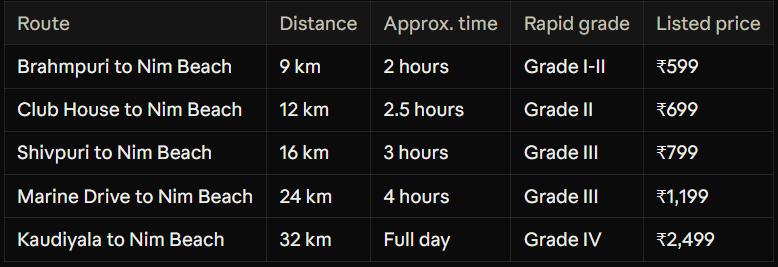
Listed prices and durations are subject to confirmation, so check the current details with our team before booking.
A few practical guidelines:
- First-timers and families: shorter, lower-grade routes such as Brahmpuri or Club House are usually a more comfortable starting point.
- Confident, active groups: Grade III routes such as Shivpuri offer bigger rapids with more teamwork required.
- Experienced rafters: Grade IV routes such as Kaudiyala are more demanding and should only be considered by people who meet the operator's requirements and the day's conditions.
The longest route is not automatically the best one. The best route is the one that fits you. For a plain-English explanation of what each grade feels like, read Grade II vs Grade IV Rapids Explained.
5. River and Weather Conditions
The Ganga is not the same river every day. Rain upstream, snowmelt and the time of year all change the water level and the strength of the rapids.
Because of this:
- Rafting normally pauses during the monsoon, when the river is too high and unpredictable
- A route can be changed, delayed or cancelled on the day if conditions are unsuitable
- Official directions and local conditions can affect which stretches are open
Check the weather forecast on the India Meteorological Department website before your trip, and always confirm the current status with your operator. Our guides Is Rafting Open in Rishikesh? and Best Time for River Rafting in Rishikesh explain the season in detail.
If an operator cancels or changes a route because of the river, that is a sign of good judgement, not bad service.
6. What to Do If You Fall Out of the Raft
Falling into the water is not unusual in white water rafting, and your life jacket is designed for exactly this moment. Stay calm and remember:
- Float on your back with your feet up and pointing downstream. Keep your head up and look ahead.
- Do not try to stand in fast-moving water. Feet can get trapped between rocks.
- Do not panic or fight the current. Let the jacket keep you afloat.
- Look for your guide and listen for instructions. Grab the safety rope or the raft when it is offered.
- Hold on to your paddle only if it is easy to do so. Your safety matters more than the paddle.
Your guide should explain this during the briefing. If they do not, ask.
7. Who Should Be Careful Before Rafting?
Rafting is physically active and takes place in cold, moving water. You should speak to your operator, and to a doctor if needed, before booking if you:
- Have heart problems, back or neck problems, or other medical conditions
- Are pregnant
- Are a non-swimmer or are not comfortable in water
- Are travelling with young children or older family members
Age and eligibility requirements can depend on the route, river conditions and applicable rules, so confirm them for your chosen route before booking.
8. Simple Safety Rules for Every Rafter
Do:
- Listen carefully to the safety briefing
- Wear your life jacket and helmet for the entire trip
- Follow your guide's commands immediately
- Keep your paddle grip secure and your feet in position
- Tell your guide if you feel unwell, cold or uncomfortable
- Leave valuables, jewellery and unnecessary items at your hotel
Do not:
- Drink alcohol before rafting
- Stand up in the raft or lean far over the side for photos
- Take off your life jacket or helmet, even in calm water
- Jump into the river unless your guide says it is safe
- Choose a route only because it is the longest or the cheapest
9. Questions to Ask Any Rafting Operator Before You Book
Not all operators work the same way, so ask before you pay. A trustworthy operator will answer clearly.
- Do you provide life jackets and helmets for every participant, and are they fitted properly?
- Who will be guiding my raft, and how experienced are they?
- Will there be a safety briefing before we enter the river?
- Which route and rapid grade do you recommend for my group, and why?
- What happens if river conditions are unsuitable on my date?
- What is included in the price, and are there any extra charges?
- What are the age and health requirements for this route?
You can also visit Uttarakhand Tourism for official information about travel and adventure activities in the state.
10. How Shivalik Ganga Adventure Approaches Safety
At Shivalik Ganga Adventure, safety is built into every step of the trip, from the first message to the final stretch towards Nim Beach.
- Trained river guides: Our guides have run the Ganga for years and lead every group through the route.
- Safety-focused equipment: Life jackets and helmets are provided to every participant, and rafts and gear are inspected before every trip.
- Safety briefing: Before getting on the river, you receive instructions on paddling commands and what to expect.
- Honest route advice: We help you choose a route that fits your group, not simply the longest one.
- Experience: More than 15,000 rafters have joined us on the Ganga, and our guests regularly mention their guides and the safe, well-organised experience in their Google reviews.
If you are unsure about a route, your group, or anything on this page, call or WhatsApp us at +91 95688 68493 before you book. Read more about our approach on our safety guidelines page.
Final Thoughts: Respect the River, Enjoy the Adventure
So, is river rafting in Rishikesh safe? When it is done with trained guides, proper gear, a suitable route and respect for river conditions, it can be a safe, memorable and genuinely joyful experience. The riskiest choices are usually the careless ones: skipping the briefing, choosing a route that is too hard, ignoring the guide, or booking with an operator who cannot answer basic safety questions.
Prepare well. Listen to your guide. Respect the river. Then enjoy the rapids, the mountain views and the laughter at Nim Beach.
Ready to plan your trip? Explore our rafting packages or message us on WhatsApp and our team will help you choose the right route for your date and group.
Related Reading on Our Blog
- River Rafting in Rishikesh for Beginners: Safety Tips and What to Expect
- Grade II vs Grade IV Rapids Explained
- What to Pack for Your Rafting Trip in Rishikesh
- Is Rafting Open in Rishikesh? Season Status, Routes and Booking Tips
- Best Time for River Rafting in Rishikesh
Frequently Asked Questions
Is river rafting in Rishikesh safe for beginners?
Suitable beginner routes can be a good option for first-time rafters, provided they meet the requirements, listen to the safety briefing and follow the guide's instructions. Shorter, lower-grade routes such as Brahmpuri are usually the most comfortable place to start. Rafting still carries natural risks.
Do I need to know swimming for river rafting in Rishikesh?
Strong swimming skills are not always required on beginner routes because you wear a life jacket, but being comfortable in water helps a lot. If you cannot swim, tell your operator when you book so they can advise you on the right route.
What safety equipment is provided for rafting?
Participants should be given a life jacket and helmet, along with a paddle and a raft in good condition. Make sure everything fits properly before you start.
Is river rafting in Rishikesh safe for families and kids?
It can be, on suitable routes, but age limits, health conditions and river conditions all matter. Contact the operator with your group's ages and details so they can recommend the right option.
Can rafting be cancelled because of weather or river conditions?
Yes. Rain, high water levels and official directions can cause a route to be changed, delayed or cancelled. This is done for your safety.


